7 Industries That Benefit Most from Weather-Triggered Ads
Introduction: Why Weather-Triggered Ads Matter
Weather changes what people buy and when they buy it. A sunny day sends people outdoors. A sudden downpour makes takeaway more appealing than a night out. Weather-triggered ads use that link by running ads when the conditions suit your product and pausing them when they don’t.
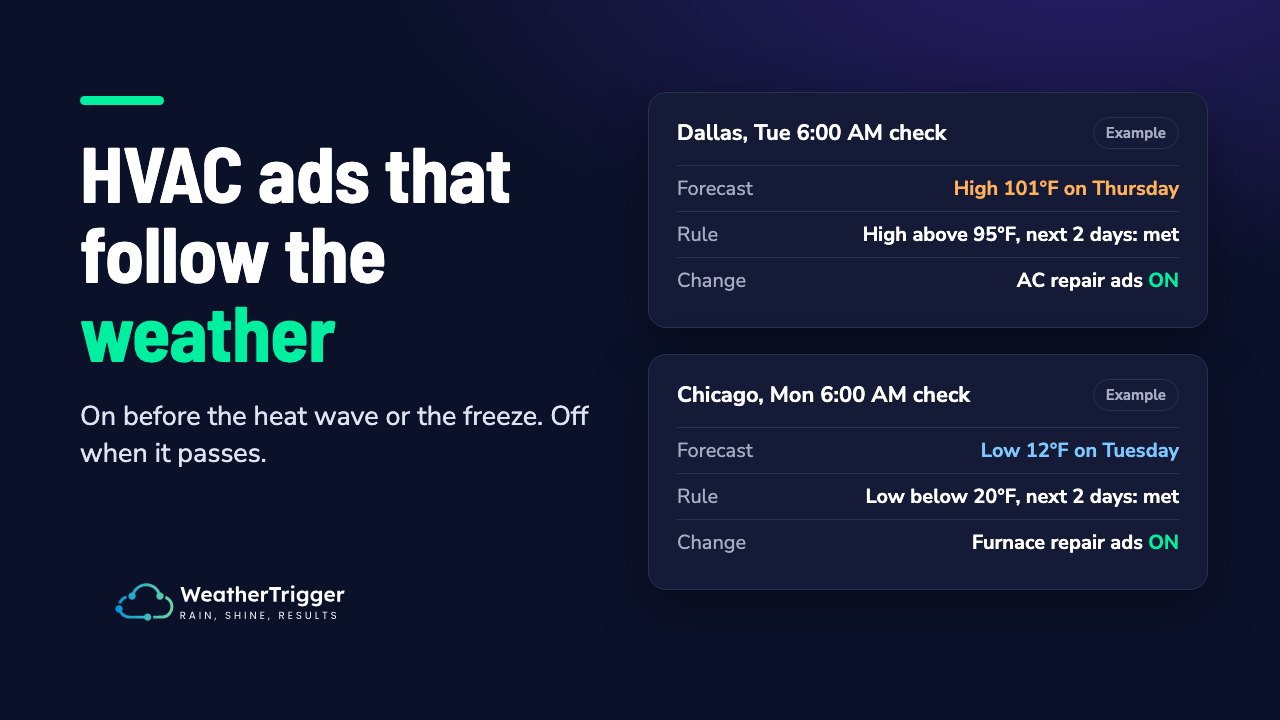
Neither Meta nor Google Ads has native weather targeting, and Meta’s automated rules can’t read the weather. Weather-triggered campaigns rely on a separate tool, script or automation that checks a weather feed and switches ads on or off through the platform’s API.
Any business can use weather in its marketing, but some industries have far more to gain than others. This guide covers seven of them, the evidence behind each one, and example rules you can adapt.
What Are Weather-Triggered Ads?
Weather-triggered ads are campaigns that start, pause or change when specific weather conditions are met in a location. A system checks current or forecast weather on a schedule and acts when a rule is true.
Common triggers include:
- Temperature thresholds (for example, a maximum above 30°C)
- Rain or snow, either forecast or already fallen
- Wind speed or gusts
- Severe weather warnings
- Humidity, cloud cover or visibility
Some tools and DIY setups also use data such as UV index, pollen counts or swell height. WeatherTrigger doesn’t read those, so where they come up below they’re flagged as needing another data source. The full list of conditions WeatherTrigger does support, with a starting rule for each trade, is on the weather triggers page.
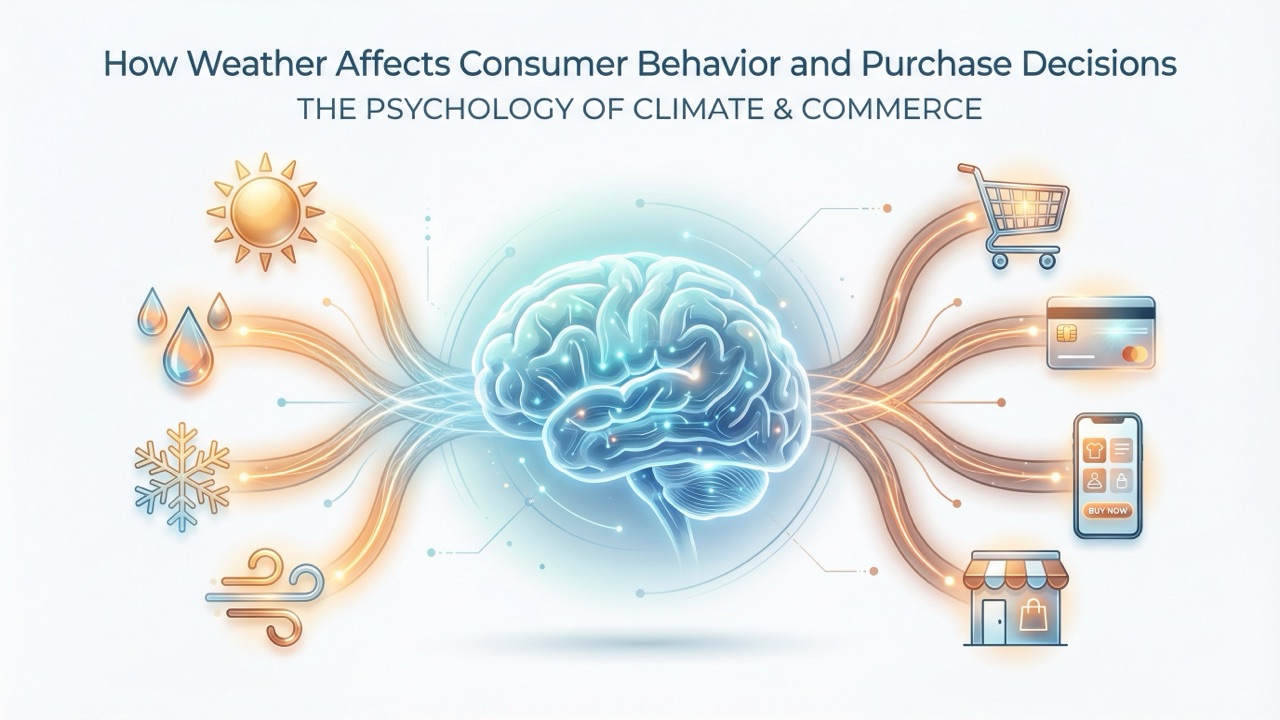
Why Weather-Triggered Ads Work
There are three main reasons:
- Relevance. An ad for a raincoat means more when it’s raining. Research on product valuation found that sunshine and snow raise how much people value products linked to that weather.
- Timing. Weather-driven demand often arrives in short bursts. A study of Swiss retail found that unusual weather often shifts purchases in time, so the aim is to be visible when that demand turns up.
- Less wasted spend. Pausing ads when conditions are wrong for your product stops budget going to people who aren’t in the market that day.
We’ve collected the wider research in how weather affects consumer behaviour.
1. Retail & E-commerce
Weather moves retail sales both online and in store, and the effect is measurable.
- Adobe and The Weather Company found that heavy rain (about 20-25 mm in a day) lifted US online spending by up to 4.4%, with about double the effect at weekends. In the UK, wet weekends lifted online spending by 12%.
- Closer to home, the ABS put a 0.7% rise in Australian retail turnover in August 2024 down to the warmest August on record. Clothing rose 1.5%.
- The effects are local. Planalytics measured weather-driven demand for air conditioners up 31% in one US city in a single month, against 4% nationally.
How it works:
- Promote raincoats, umbrellas and waterproof footwear when rain is forecast.
- Push summer clothing when temperatures rise above a set threshold.
- Lean into online offers on wet weekends.
Example (illustrative):
An online outdoor retailer could run two Meta ad sets:
- Hiking gear and breathable apparel, switched on when the forecast is dry and mild.
- Waterproof boots and thermal jackets, switched on when heavy rain or a cold change is forecast.
Pro tip: Set rules per location. Because weather effects are so local, a rule tied to one city or region beats a national on/off switch.
2. Food & Beverage
Restaurants, cafés, bars and delivery services all see demand move with the weather.
- A study of food delivery across 100 Chinese cities found lunchtime orders rose more than 12.6% as temperatures went from 20°C to 35°C, and 21.4% at 40°C.
- Westpac card data from Sydney, Melbourne and Adelaide shows that on days of 35°C or more, daytime spending drops by about 12-13% while evening spending rises about 5%. Spending at bars and clubs rose 10-20% into the night.
- In 2013, Molson Coors ran Facebook ads in Canada that switched on above 23°C in sunny weather. The weather-specific ads had a 67% lower cost per click than generic creative (agency-reported, and Meta’s ad delivery has changed a lot since).
- Guinness Australia’s 2023 “Brewery of Meteorology” campaign switched on digital billboards near pubs when it dropped below 7°C. It won a JCDecaux programmatic campaign award, with pub visits up 14.7%. It ran on outdoor screens, not social, but the principle is the same.
How it works:
- Promote hot drinks, soups and comfort food on cold or rainy days.
- Push ice cream, cold drinks and salads during hot weather.
- On very hot days, shift delivery and evening offers later in the day.
Example (illustrative):
A pizza delivery business could:
- Run family meal deals when heavy rain or storms are forecast, when fewer people want to go out.
- Promote cold drink add-ons when the maximum is forecast above 32°C.
Pro tip: Pair weather rules with ad scheduling. The Westpac data suggests hot-day demand moves into the evening, so that’s where your hot-weather ads should run.
3. Travel & Tourism
Travel is one of the most weather-sensitive purchases. Two places’ weather matters: where your customers live decides when they’re in the mood to book, and the destination decides what to show them. Wet weekends are a good moment, since that’s when online spending rises most and when many holidays get planned.
How it works:
- Advertise beach and island getaways to people in cities where rain is forecast.
- Promote indoor attractions at the destination when rain is on the way.
- Push last-minute deals when a mild, dry weekend is forecast nearby.
Example (illustrative):
A tourism operator could:
- Show a “swap the rain for the reef” offer in Melbourne when a wet weekend is forecast.
- Switch on ski-trip ads when 10 cm or more of snow has fallen at the resort in the past 24 hours.
For more rules and pitfalls, see our guide to weather-triggered ads for travel and tourism.
4. Sports & Outdoor Recreation
Golf courses, kayak hire, outdoor gyms and adventure operators all depend on the weather. Bookings follow good conditions, and advertising into bad conditions mostly wastes money.
How it works:
- Promote golf bookings when a dry, mild weekend is forecast.
- Offer indoor sports and climbing gym deals when rain is forecast.
- Push kayak and paddleboard hire on calm, warm days (low wind speed and gusts).
Example (illustrative):
A kayak hire business could:
- Run ads for same-day and next-day hire when the forecast is warm with gusts under 20 km/h.
- Pause ads when a severe weather warning is current or strong winds are forecast.
Pro tip: Surf and sailing businesses often care about swell and wave height. WeatherTrigger doesn’t read marine data, so for that you’d need a surf-forecast source and your own automation, such as a Make scenario. Wind and rain rules still cover a lot of the “go or no go” decision.
5. Automotive
Car dealers, service centres and accessory retailers all see weather in their numbers. A study of more than 40 million US vehicle sales found that an unusually warm week lifted the convertible share of sales by about 8.5%, and heavy snow lifted four-wheel-drive sales by about 6% over the following weeks. The weather on the day changed what people bought.
How it works:
- Promote air conditioning servicing and re-gas when a run of hot days is forecast.
- Advertise tyres and wiper blades ahead of the wet season or a run of rainy days.
- Run car wash ads once the rain clears.
- Promote 4WD and SUV models after snow in alpine regions.
Example (illustrative):
A service centre could:
- Switch on air conditioning service ads when the maximum is forecast at 35°C or more in the next three days.
- Promote pre-trip safety checks before a long weekend, and pause them if a severe weather warning is issued.
Pro tip: Weather ads work well alongside the email or SMS service reminders you already send.
6. Home & Garden
Home improvement, garden and outdoor living brands see sharp, local swings in demand. Planalytics estimated that weather cut lawn mower demand by 10% in Baltimore in summer 2025, while pool chemicals rose 14% in Indianapolis. Storm preparation shows up clearly too: before Hurricane Ian, card spending at general retailers peaked five days before landfall.
How it works:
- Promote lawn care and garden products after rain.
- Push BBQs and outdoor furniture ahead of warm, dry weekends.
- Run storm prep and gutter cleaning ads when severe weather is forecast.
Example (illustrative):
A local hardware store could:
- Run ads for outdoor furniture and patio heaters when mild evenings are forecast.
- Promote storm prep kits when a severe weather warning or cyclone watch is issued.
Pro tip: Link your rules to stock levels. A weather spike is only worth paying for if you have the product to sell.
7. Health & Wellness
Some health needs follow the weather, which makes well-timed messages useful as well as effective.
How it works:
- Promote hydration and electrolyte products during hot spells.
- Push sunscreen and after-sun when temperatures are high and skies are clear.
- Remind people about flu vaccinations as cold weather sets in.
Example (illustrative):
A pharmacy could:
- Switch on hydration and heat-health ads when the maximum is forecast at 35°C or more.
- Run cold and flu ads when overnight temperatures drop below 5°C.
Pro tip: Allergy and hay fever brands usually want pollen data, and sunscreen brands often want the UV index. WeatherTrigger doesn’t read either, so those rules need a separate data source. Temperature and cloud cover are a reasonable stand-in for sunscreen. Keep health messages factual, and check Meta’s advertising policies for health products before you launch.
Best Practices for Weather-Triggered Ads
- Start with one or two triggers. Prove one rule works before adding more.
- Set rules per location. Weather can differ a lot within a single city, so keep areas tight.
- Build creative for each condition. Create a separate ad set with weather-matched copy and images, and let the rule switch it on. Rainy-day and sunny-day versions of an ad shouldn’t be the same ad.
- Mind the platform mechanics. On Meta, resuming an ad set that has been paused for 7 days or more restarts the learning phase. Pausing one ad set inside an Advantage+ campaign budget shifts its spend to the others. Our Meta weather targeting guide covers both.
- Measure against a control. Demand rises on rainy weekends whether or not you advertise. Compare locations with the rule against similar ones without it. Our weather ad measurement guide shows how.
Conclusion: Timing Is Everything in Marketing
For the industries above, weather is one of the clearest signals of when demand will arrive. Matching your ads to what’s happening outside keeps them relevant and stops budget going to days that won’t convert.
WeatherTrigger pauses and resumes Meta ad sets based on the weather in each location, including temperature, rain, snow, wind, humidity and severe weather alerts. Google Ads support is coming soon. Try it free for 30 days, no card needed.